


My Dharma

Why this exists
Some of this will sound familiar.
Most families who still keep a puja at home will recognise a few of these.
ధర్మం పండుగ రోజున మొదలవదు. ప్రతి రోజూ జీవించేదే ధర్మం.
Dharma does not begin on festival day. It is lived every day.
- We do the pujas and observances, but nobody ever explained why, or how they fit together.
- Our children ask questions, and our answers don't quite satisfy them, or us.
- We are not sure which kula daivam is ours, or when the family last visited the temple.
- The ancestors' days pass unmarked, because nobody ever wrote them down.
- Festivals become a last-minute rush instead of something we prepare for.
- We half-remember our grandmothers' rules about the kitchen and the shrine, and are not sure which still apply.
- The elders who knew are gone, and much of what they knew went with them.
- The puja room is still there, but the family rarely sits in it together.
What gets built
Your family's own record.
Most families stopped writing any of this down a generation or two ago. Alongside the teaching, we help you build a written record of your own household: your people, your ancestors, your deities and your customs.
Watch
Hear it from us
Short talks from our team on where our daily practices come from, and why they matter.

Sanatana Dharma essentials: the five runas explained
The five inheritances every life arrives with, and why acting from them is what makes a practice last.
The path
Four milestones.
Milestone one covers the basics and starts your daily practice. Milestone two builds up to a full daily puja you can do with confidence. Milestone three takes it into the kitchen. Milestone four is personal guidance for each member of your family.
Enroll any day and start right away. Everything is taught in simple language, and nothing assumes you grew up with these practices.
The BasicsThe basics, and your daily practice startedBefore any worship makes sense, there are some basic things a household needs to know, and some old habits most of us half-remember without knowing why. This milestone explains each one simply and gets your family practising from the first week.What's covered
Why any of this works
- What a household is actually doing when it practises, and the idea of receptivity
- The five inheritances every life arrives with, and why acting from them is what makes a practice last
- The two kinds of result any act carries: the one you can see, and the one you cannot
The first daily practices
- The lamp, morning and dusk: the smallest daily act, and the one everything grows from
- The first thought of the day, and who it belongs to
- Greeting the elders of the house, and what to do when they live elsewhere
- Water for the tulasi, or whichever plant the home keeps
- A minute before sleep, looking back at the day
Getting ready for worship
- What bathing and a separate set of clothes are actually doing: the old method of settling body and mind before an act of worship
- How it is done, and which cloth suits which day
- What is essential, what is not, and why nobody needs to be anxious about any of it
The morning, act by act
- The hour before sunrise, and what to do if your mornings cannot allow it
- The first few acts on waking, before the phone
- Water on an empty stomach, and the vessel it is kept in
- Washing, teeth, the tongue and the bath: the order, and why there is one
- Honest answers for modern mornings: geysers, night baths, late starts
Achamanam and simple breathing
- What it is for: the doorway between one activity and the next, which the body recognises even when the mind is elsewhere
- How it is done, step by step
- The simple breathing that follows, and what it does to a scattered mind
- Where else in a working day it belongs
Dressing, and the marks
- Tying a panche: both the common styles, taught slowly enough to actually learn
- The upper cloths, and what each is for
- The saree as it is worn for worship
- The marks on the forehead: the materials, your family's way rather than a default, and what each is doing
The household's clean order
- What our grandmothers meant by their rules about food, vessels and hands, and what each one was protecting
- Which still earn their place in a modern flat, and which were always local custom
- How to keep a clean order without turning the house into an anxious place
Reading our own calendar
- What a tithi is, and why it is not the same as a date
- Why your own star returns every month, and why that day matters more than a birthday
- Enough of the reckoning to read the household's own days
- Using the calendar to plan for good days, not to fear bad ones
Lighting the day's lamps as a settled habit, dressed properly for worship without help, able to do achamanam correctly, and reading your household's own calendar.
Your household record and calendar, built around your family, and the few things the morning practice needs.
The Puja Mandir & the Daily PujaSetting up the mandir and learning the daily pujaBy now the lamp is lit every day. This milestone builds on it: setting up the mandir properly, learning what each vessel is for, and learning the daily puja from start to finish until you can do it without looking at your phone.What's covered
Where the puja room belongs
- Choosing the spot in your home, and which way to face
- What to do when the ideal corner isn't available, as it usually isn't
- The places to avoid, and why
- What should never be kept in a puja room
The mandir itself
- A shelf, a standalone mandir or a room: choosing by your home and your means
- Materials: which are preferred, which to avoid, and the practical city choice
- Size and proportion, and why smaller usually suits a household better
- Open or closed on the sides, and when each applies
Murtis and photographs
- The metals used, what each is associated with, and how to choose
- What size is right for a household, and why bigger is not better
- Consecration: what it means and when it matters
- Caring for each metal, with what, and how often
- How photographs should and should not be placed
- Why the murtis that came down from your elders are better than anything new
Every vessel, named and explained
- The full set a household needs, and what each piece is actually for
- The water vessels, the lamps, the bell, the plates, the seats
- Which metals, and why old vessels are better than new
- How it is all laid out before you sit down, and why the layout is what it is
- Cleaning and caring for each, without damaging it
Arranging the deities
- Where each belongs in the mandir, and in what order
- Your kula daivam and your ishta devata: where each sits
- The arrangement your own sampradaya follows
- What to do if you have very few murtis, which is not a problem
Keeping it, daily
- Clearing the previous day's offerings: when, how, and where they go
- Cleaning the shrine, and what goes into the water
- The muggu, and the patterns traditionally used
The daily puja, end to end
- The whole sequence, in five to seven minutes to begin with
- Naming where and when you stand before you begin, and why that matters more than it sounds
- Why the lamp, the bell and the incense work on a scattered mind: each a different sense, settled in turn
- Stotras taught with their meaning, so you know what you are saying
- Why a mantra needs a living teacher, and no app can stand in for one
- How the short daily puja grows into the fuller worship, for those who want it
Able to sit at your own shrine and perform the daily puja from beginning to end, unprompted, knowing what each act is for.
The vessels, lamps, bell and seat the practice needs, and the set for caring for them; only what your house does not already have.
The KitchenThe most important room for offering in the homeThe cleanliness you learned in the first milestone now comes into the kitchen, where it matters most. Your family also starts offering food before eating, a small habit that changes a lot.What's covered
The room
- Where the kitchen belongs, which way to face while cooking, and the alternatives when neither is possible
- Light and air, and why they matter more than they seem to
- The one rule about footwear that does most of the work
Keeping it
- Cleaning the stove and the room: what to use, and when soap is the right answer
- What must be kept separate from what, and why
- The old scouring methods, and what they were actually doing
What keeps, and how
- Milk, curd, ghee and oils: how they are handled and stored
- Drinking water, and the habit our elders had around it
- Raw produce, grains, pickles and the household podis
- How long cooked food genuinely holds, and who should not eat it after that
- The refrigerator: keeping a modern kitchen in good order
Cooking
- What comes before cooking food that will be offered
- Tasting while cooking: what the tradition says, and what to do instead
- Why food is not cooked in anger, and what the tradition says passes into it
- Serving without contact: the small rules that make a meal clean
- What changes on the days a shraddha or a homa is happening at home
Offering before eating
- The day's food offered first, and how little it takes
- The morsel set aside for animals and birds, and how to do it in a flat
- Water for whoever comes to the door, without ranking the visitor
Eating
- How a meal is sat down to, and why sitting matters
- The old rules at the plate, and the reason behind each
- Clearing and cleaning afterwards
- One meal a day together, which in these times is the biggest practice of all
Running a kitchen where all of this is simply how the room works, and offering before the family eats without it adding a minute to the cooking.
The bowls and plates kept for offering, the dining vessels, and the natural cleaning set.
Personal ConsultationGuidance for each member of the familyUntil now the family has practised together. Here each member gets guidance of their own. The consultation has two parts: a group session with other families at the same stage, where common questions are answered in depth, and then a private session with your family alone.What's covered
Person by person
- Which vratas suit whom, and when each should begin
- Each member's daily puja, adjusted to their time and temperament
- What the children are given at their age, and how
- What falls to the head of the household, and what does not
- The stotras that belong to each member's star
The ancestors
- The daily remembrance: who in your family performs it, and how
- Their days, amavasya and Pitru Paksha, set into your calendar
- Where their photographs belong, and where they do not
- What the tradition prescribes when the days are genuinely not known
The rest of the house
- The bedroom: where it belongs, and how a room is kept for rest
- How we sleep, which way, and the habits before sleeping
- Anything in the house quietly working against the practice
How we speak and conduct ourselves
- Greeting, and how one speaks to elders and to teachers
- Serving at a festival, and serving at a shraddha, which are not the same
- Conduct at a temple
- What is expected at a wedding, on both sides of a family
Your own tradition
- Your family's sampradaya and its specifics, confirmed rather than assumed
- The customs your family kept that nobody wrote down, recovered where we can
- The life events due in your family over the next few years, mapped out
- Whatever remains open, referred to a purohita who knows your tradition
Your family's practice plan, and the record completed: each member's own observances, the year ahead marked, the open questions answered or referred.
The milestones are done. From here your family goes as deep as it wants, and we stay with you.
Pace
Each milestone takes a few weeks
Each milestone stays open for at least a few weeks, because the aim is a habit, and habits take time to settle. We would rather your family went slowly and was still practising two years from now than rushed through and stopped.
Life comes first
When something comes up, we adjust
A festival two weeks away, a naming or a wedding coming up, or the rites after a parent passes: tell us, and we will guide you through it right away, whatever milestone you are on.
Your circle
You won't do this alone.
Families used to keep their practices because the families around them did too: the same festival on the same day, the same preparations, questions asked across the wall. Modern life took that away, and it is hard to rebuild on your own.
So every family joins a small circle of families who started around the same time. You move through the milestones together and meet at the same workshops.
Workshops
Some things are better learned in person.
Tying a panche, handling a brass vessel, cooking naivedyam: these are hard to learn from a screen. So we hold workshops in person, and you can join online if you can't be there.
Live workshops
Hands-on and in person. Join on video if you can't make it.
For your stage
You join the workshop for the milestone you are on, so everyone in the room is at the same stage.
Come back any time
Once you finish a milestone, you can come back to any earlier workshop as often as you like. Just RSVP.
In the room
After the consultation
And from there
What comes after.
Once the four milestones are done, your family carries on at its own pace and depth, and we stay with you.
The year, prepared
Ugadi, Varalakshmi Vratam, Ganesh Chaturthi, Karthika Masam and your family's own days, each with time to prepare and its meaning explained.
Going deeper
The stotras and fuller worship of your kula daivam and ishta devata once the daily puja comes naturally, and further sadhana for those who want it.
Life events
Naming, first food, the start of learning, the sacred thread, marriage, and the rites after a parent passes. Each explained well before the day arrives.
Yatra, done properly
What to do before, during and after a temple visit, so it is more than standing in a queue.
Someone to ask
Bring us your everyday questions. When one needs an expert, we connect you with our purohitas and specialists.
The record, kept
Your family's record stays with you and stays up to date for as long as you want it.
Enrollment
Choose your contribution
MyDharma is offered in the spirit of Dakshina. Contribute what feels right for your family, as a yearlong commitment to your household's dharmic life.
Step 1 · Your contribution
Suggested · ₹36,000 for the year
What your contribution includes
- The full programAll four milestones: classes, practical workshops and the complete curriculumEvery family
- Community SanghaYour circle of families, learning alongside youEvery family
- Personal consultations with our expertsGuidance for each member of your family₹18,000 and above
- Wallet credit for puja mandiram, kitchen and household essentialsUse toward a kalasha, brass diya, satvic cooking vessels, pure ghee, and other items you'll learn to bring into your home₹12,000
Step 2 · Your family
Tell us about your family
Fill in your details below. Our team will call you within a week to get started.
Loading the form. If it does not appear, message us on WhatsApp and we will enroll you.
After you submit, you will go to secure checkout to pay ₹36,000. Calls and WhatsApp, 9:00 AM to 9:00 PM, every day.
Thank you
Taking you to payment
Your details are saved. Opening secure checkout for ₹36,000.
Continue to paymentYour contribution supports our teachers, purohitas, and the Veda Pathashalas we are connected with. Every rupee above ₹24,000 returns to your family as wallet credit.
Charged separately, only if and when you need them
- Samagri and festival bundles
- Pujas, samskaras and pitru karma when the occasion comes
- Consultations with a purohita, jyotishya or ayurveda specialist
Samagri is always billed at actuals. Where a purohita serves your family, the gurudakshina reaches them in full.
Want to talk first?
Calls and WhatsApp, 9:00 AM to 9:00 PM, every day.
Talk to us on WhatsAppIs cost the only thing in the way? Read this.
If cost is a concern
Money should not keep you away.
If you want to join and even the lowest contribution is more than your family can manage right now, write to us and tell us your situation. Only our team reads it, and we will get back to you personally. If the need is genuine, your family will be enrolled. You will not be asked to prove anything.
Where your contribution goes
It pays the scholars and purohitas who wrote and check every lesson, fairly and not as a favour. It keeps each family's record and calendar running for years. And it pays for sourcing materials of a quality we are happy to put our name to.
It also keeps Karishye able to grow, so we can reach more families in more languages.
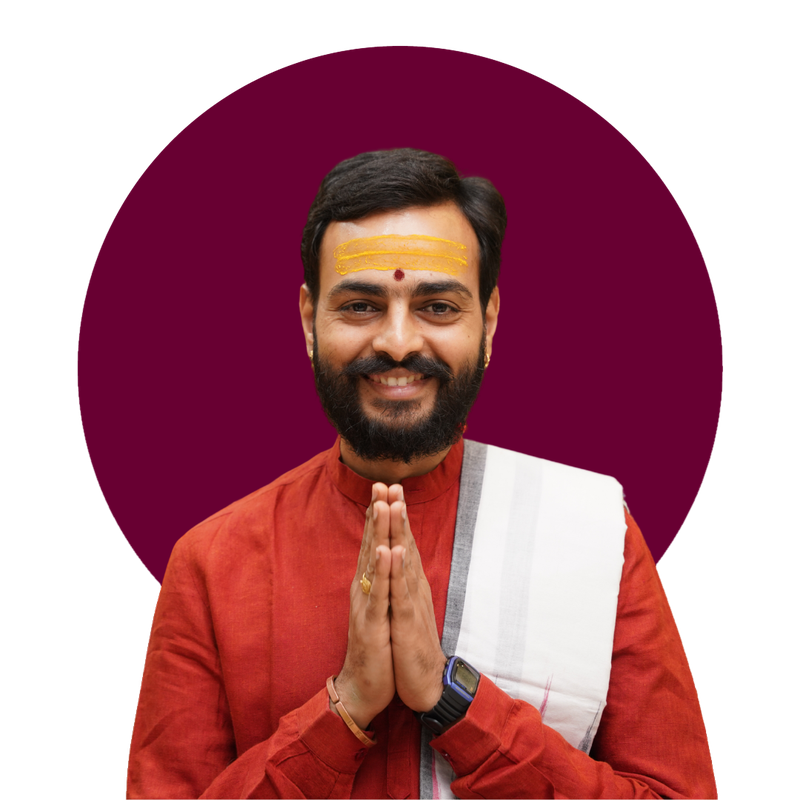
Who is behind this
“Better to come not-knowing than to not come at all.”
We started Karishye because dharmic life should never be sold through fear, priced unclearly, or handed down as rules without reasons. All shastric guidance in this program is set by Dr. Suryanarayana Jammalamadaka, our Chief Dharmic Officer. Where sampradayas differ, we tell you, rather than pick one and present it as the only way.
Dr. Suryanarayana JammalamadakaChief Dharmic Officer & Co-Founder, Karishye
Questions
Questions before you enroll
Something else on your mind? Message us on WhatsApp, 9:00 AM to 9:00 PM, every day.
How much should we contribute?
Whatever feels right for your family, anywhere from ₹6,000 to ₹60,000 for the year. We suggest ₹36,000. Every family gets the full program and the community Sangha. Personal consultations with our experts are included from ₹18,000, and every rupee above ₹24,000 comes back to you as wallet credit for your home.
Do we need to know Sanskrit, or any of this already?
No. We assume nothing and explain everything, including the words. Families who grew up with these practices and families who didn't both do well here.
How long does it take?
Each milestone stays open for a few weeks, because habits need time to settle. Beyond that the pace is yours, and your enrollment runs for a full year.
What if a festival or a family event comes up mid-way?
Tell us and we will guide you through it straight away, whatever stage you are at. A wedding, a naming, a death in the family or a festival two weeks away is exactly when a family needs guidance most.
How do we know when a milestone is complete?
Each milestone ends with a small practice you do at home and share with us, so our guidance is based on what is actually happening in your home. Only our team sees what you send.
Does the whole family have to do this?
One person can start on their own. But the practices are meant for the whole household, and the consultation works best with the family present. Children are welcome throughout.
We don't know our kula daivam, or our ancestors' days.
Most families don't, and recovering what we can is a big part of this program. Where something cannot be traced, we tell you, and teach what the shastras prescribe for that situation.
Our family follows a particular sampradaya.
Tell us in your first conversation with us, or in the enrollment form. Where traditions differ, we teach your family's way, and we tell you openly where they differ.
Can we take part if we live outside Hyderabad?
Yes. You can take part from anywhere in the world. Every workshop can be joined on video, and we start in-person sessions in a city once enough families there have joined.
We already own most of the vessels.
Then your wallet credit goes toward whatever is actually missing at home. That is why it is a credit and not a fixed box of things.
Is what we share private?
Yes. Your family's record and anything you send us stay between you and our team. Nothing is shown to other families unless you choose to share it.
 Dharma, lived every dayEnroll your familyEnroll